Episode 11: Digitalisation of Protest
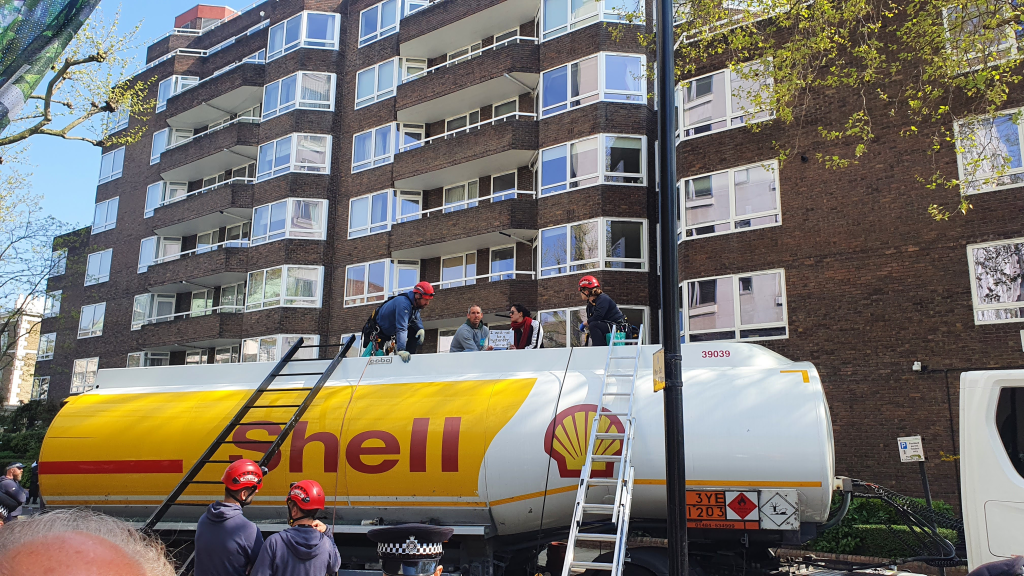
2022. London. Sign reads: “I will not be a bystander.”. Of all Shell’s crimes, the slogan ‘Shell Knew’ refers to Shell knowingly taking part in bribery and corruption in Nigeria, depriving citizens of billions in revenue, redirected to corrupt officials.
I have been protesting for about ten years. Protesting climate change mostly, but also some social justice issues.
Global warming continues to accelerate. Yet we have mobilised some of the biggest crowds ever held. Blocked streets. Striked. Disrupted. Protested in all forms. So what gives?
Well a lot. Its folly to point to a single thing as the ‘reason’ why we are being ignored, why our future is being stolen from us. But as mentioned before, this blog is focussed on our relationship with digitalisation rather than political critique. With this in mind today’s blog is focussed on our changing relationship to creating change in our environment and ‘doing things’.
The subject is protest, but really the below issues apply more broadly about making change in your environment. More specifically: why posting online doesn’t always lead to change despite everyone being ‘aware’.
Problem 1. The dopamine-inaction loop.
A problem is that preparing a good social media post, reposting someone’s great protest content or even viewing protest content creates an emotional cycle. The dopamine kick you get from having a bunch of people view, and like, your deviant content creates a problem: your brain rewards you for ‘doing something’ but in the real world you may have achieved very little. Your echo chamber already agreed with you, and importantly they don’t have agency over the issue at hand.
And since social media rewards you to move on fast, its quickly forgotten. Its the pre-digital world equivalent of only mentioning an issue in passing… ten drinks deep on a night out with your mates.
Creating change is more than just informing people of the problem. It’s also the hard-work of talking to people in real-life. Creating communities and friends. It’s forming and brokering alliances. It’s understanding other people’s priorities. It’s putting on a suit and having lunch with the ‘enemy’. It’s disruption where it counts. It’s gathering real-world resources (favour, goodwill, hard cash). It’s tightening your own digital privacy, and teaching others. Importantly, it’s more than just information spreading. It’s certainly more than just advertising your personal brand of Activist™.
Of course, there are huge positives that can’t be understated. Social media has been pivotal in making struggles go viral, and often raising loads of money for said struggles. Social media has connected us to issues historically hidden from us. We have witnessed struggles unseen, on-the-ground reporting from activist front lines, and received exposure to ideas we wouldn’t normally encounter. This is great.
So recognising this, I’ll reluctantly admit we need both. We want to retain these upsides whilst eliminating the ‘dopamine-inaction’ problem described above. So the problem then is balance. We need to change the current situation of 90% digital protest and 10% real life protest to something that punches a bit harder.
This applies whether you are a climate activist, opposing imperialism, protesting inequality, fighting genocide or even more local matters: speeding in your neighbourhood, taxes being too high, male loneliness or beaver reintroduction in your local waterway (whether you are for… or against).
Problem 2: Visibility, foolishness and confession as a value
Another odd thing about the digitalisation of protest is a new emphasis on protestors putting everything online for all to see. The obvious consequences being leaving a massive digital footprint of your activities and a damning record. Authorities have used, and importantly abused, these online presences to lock up protestors they disagree with and throw away the key.
The British Government has recently become particularly fond of brandishing everyone ‘terrorists’ who disagree with them and handing out ludicrous prison sentences. They seem to have forgotten that democracy is built upon protest.
I pride myself on being an honest person. I have not (yet) in my life committed any crimes and I don’t intend to anytime soon. Nor for obvious reasons, does this blog condone illegal behaviour.
But this doesn’t mean I, like many activists, should be setting ourselves up to fail. There is a timeline where democracy is lost, the government changes laws and retrospectively applies them and uses your digital footprint as evidence. I think we need to ask ourselves if the protest content people put out advances the actual cause, or serves primarily our own self-interest (validation, community acceptance, seeming cool or right). This blog is not here to judge, but I leave on a question:
Where does the idea come from that protestors have to martyr themselves in-front of the law, whilst those they oppose abuse it and hide behind power?I’ve been thinking recently this comes from a value rooted in Christianity. I’m not certain. Comment is free.